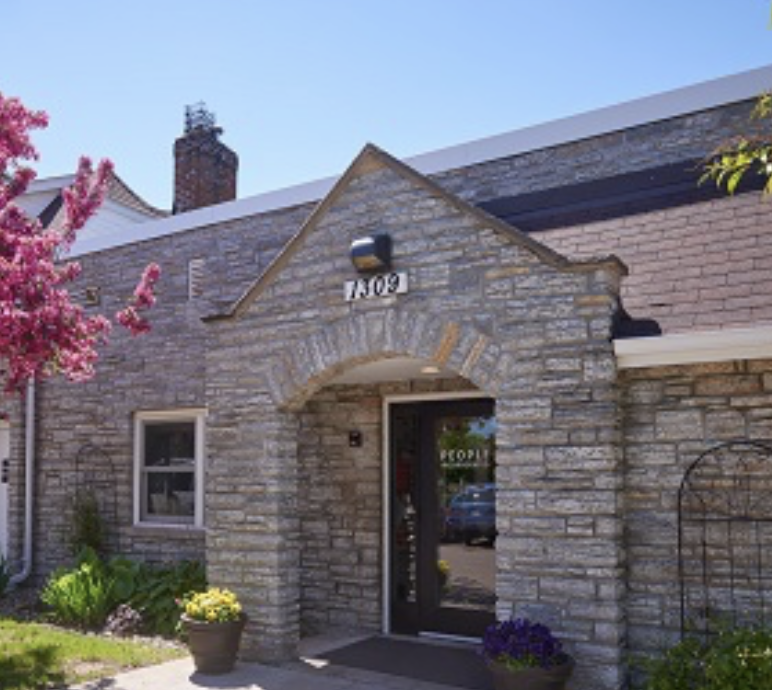
We have had the pleasure to bring monthly mind-body coping skills groups to People Incorporated’s Northside Community Support Program since November 2025. The Northside Community Support Program helps adults living with severe, persistent mental health concerns access community-based services, therapy, food, employment, and legal aid.
Because of the positive impact we see when leading mind-body coping skills groups in crisis mental health settings, this collaboration fulfills a dream of ours–providing information about a free resource we all have access to that can provide relief during times of stress. Bringing these skills proactively to people in the community is in large part the reason I wrote my book, I Am Safe: Trauma-Responsive Practices In Crisis Mental Health, which outlines experiences sharing these strategies in crisis mental health settings along with simple steps to incorporate these practices into your life and work in your community.
In honor of Mental Health Month, we want to share what a mind-body coping skills group can look like in the community, with the invitation that you take these ideas and make them your own!
Welcome – People may be hesitant or nervous to explore breathing and movement practices. So, the invitation needs to address that potential barrier. A wonderful way to do this is to clearly state, ”Would you be willing to try a few stretches with me? Even if you aren’t sure, I’d love for you to hang out and just see what you think. Sometimes just being around people who are stretching and breathing can make you feel more settled.” Often this permission is just what is needed to keep someone in the room.
There is Always a Way For Everyone – Whether you are sharing gentle stretches in the chair, standing stretches, or practices like tapping, head holds, and breathing, make them as inclusive as possible. Give several options for each stretch. Instead of reaching arms high over head, also offer the option to gently reach hands behind the back. That way mobility issues or injury won’t make people feel unsuccessful. When sharing tapping or head holds, always give permission to skip or change the move based on how it feels. If I tell you that placing your hands on your head is relaxing, and it actually makes you feel vulnerable, it could discourage you from trying other ways to settle your mind and body.
Encourage Reflection – Throughout the session periodically ask, “How does that feel for you?” Depending on how safe and connected people are feeling, it might not be an easy question to answer. You can also share the moves you notice that seem to be effective for someone. Just this week I shared with a woman, “You are really smiling when you do those seated twists–does that feel helpful to you?” Part of being trauma-responsive is really paying attention to how people are reacting to the group. If someone doesn’t want extra attention, give them more space and continually affirm their ability to choose what they try and what they skip.
This is very much what our group looks like at the Northside Community Support Program–and it’s something anyone can learn to do.
If you’re a mental health professional, community worker, educator, or caregiver who wants to bring mind-body practices to the people you serve — this work is for you. Download a free chapter of I Am Safe and get a three-move practice you can use and share right away. Want to learn more? Join us June 12 for a full-day hybrid I Am Safe training — spend the day with others who care deeply about community mental health and leave with a wide array of strategies to add to the great work you are already doing!