Many schools and healthcare settings are navigating increasing mental health concerns this year and looking for additional support for staff, youth, adults, and families.
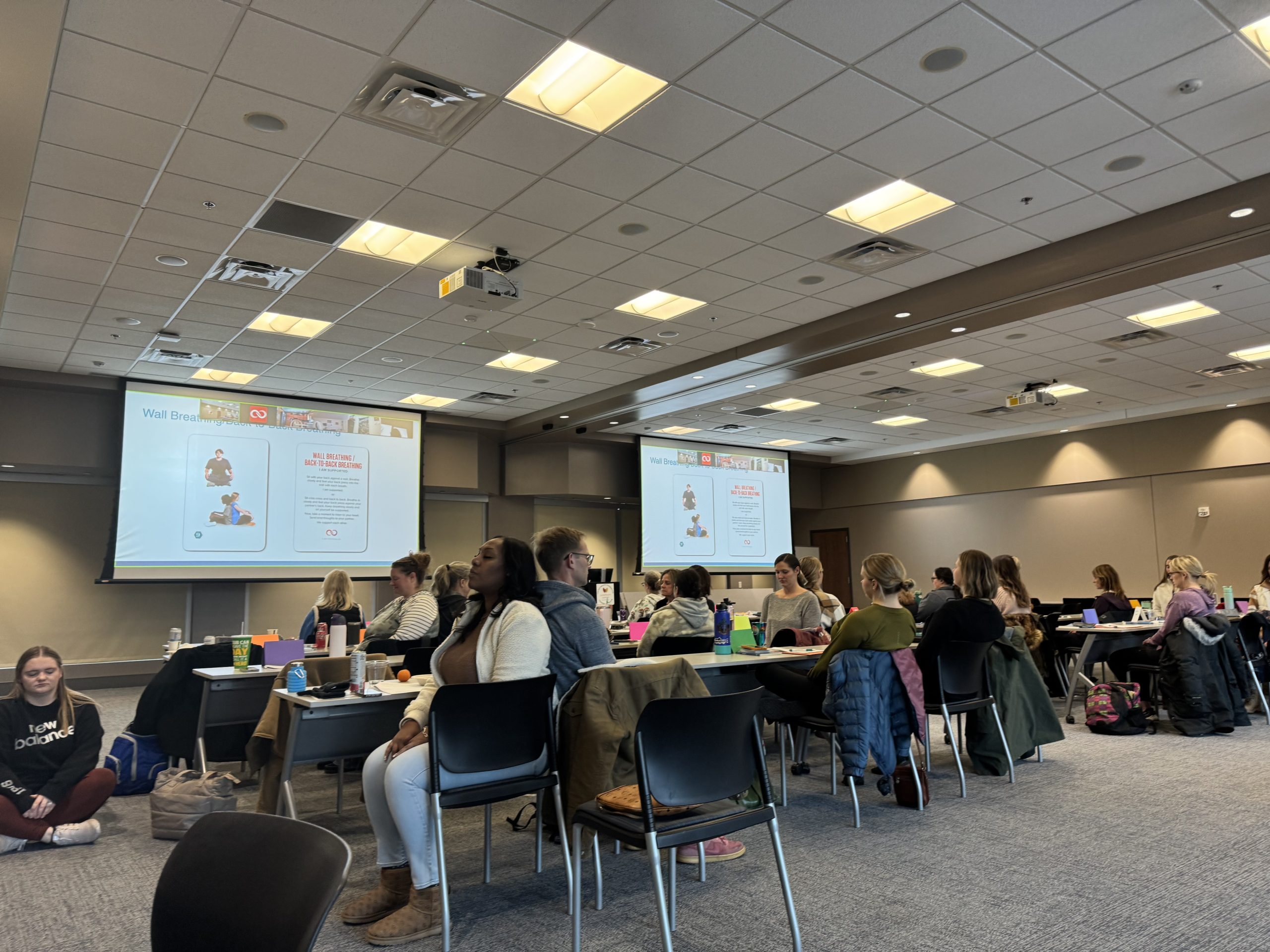
Our I Am Safe training is coming up on October 29 at PICA Head Start Training Center in Minneapolis. This training is an opportunity for you to spend time with like-minded educators, mental health workers, and parents for a day of connection, learning, and collaboration.
Register now and join us to slow down and connect.
Explore real-life stories from teaching in high-intensity environments
The I Am Safe framework is distilled in my guidebook I Am Safe: Trauma-Responsive Practices in Crisis Mental Health. Drawing from over 3,500 hours of teaching in mental health settings, juvenile services, and special education, this book and framework explore what it looks like to share mind-body practices with youth and adults in higher acuity settings. The stories illustrate how to create enough safety for reluctant and resistant children, teens, and adults to be willing to try out regulating movement and mindfulness activities.
Recently I was teaching at juvenile services and working one-on-one with a youth who struggles with “crashing out” when he gets frustrated. Knowing that breathing practices can feel inaccessible when you’re dysregulated, we tried wall breathing – sitting on the floor with our backs resting against the wall – while playing a mindfulness game. After we finished the game, which involved listing things that make us happy, he quietly said, “I’m not gonna lie… I really do feel more calm after sitting with my back against the wall.” He said he would try to use wall breathing when he needs to slow things down and reset and will check in with me to let me know how it goes. Wall breathing is a skill that often works well with children and youth who resist traditional breathing practices. It’s a sneaky way to slow down your breathing and reset when you are feeling overwhelmed.
Design your key messages to increase buy-in
When I was working with younger children in a mind-body skills group, several 8- to 10-year-old boys were struggling with high energy and running up and down the hall. I suggested everyone choose either a wall sit or a plank and that we try to hold it for one minute. A few boys chose a wall sit while another boy and I held a plank. After the minute was up, everyone said how hard it was to hold a wall sit or plank for that long – but they agreed they all felt better. I shared the science behind weight-bearing movements and how that can calm your mind and body. One boy said the plank felt good but he’d rather be outside running and playing. I said that I would too – but holding a plank or wall sit not only takes energy like running outside does, it also releases some of the same feel-good chemicals – especially when you can’t get outside. The boys agreed to try a wall sit or plank next time they need to settle down and focus.
Try simple, accessible mind-body practices to use and share
Almost every time I have taught lately – with children, teens, and adults – I have shared head holds. Placing your hands on the top of your head like an athlete, interlacing your fingers and supporting the back of your head in your hands, or resting your forehead in your hand helps you slow things down, take a breath, and reset. People naturally do these moves all the time – and you can use them intentionally when you need a quick break.
This is simple, accessible, and practical knowledge you can integrate right away into your day – for yourself, your students, your clients, and your family.
If you want to learn more and build your own mind-body toolkit, while also exploring strategies to share with others, join us October 29 for our I Am Safe training. Take time to connect, collaborate, and learn new ways to support mental health, well-being, and belonging in your professional and personal life.